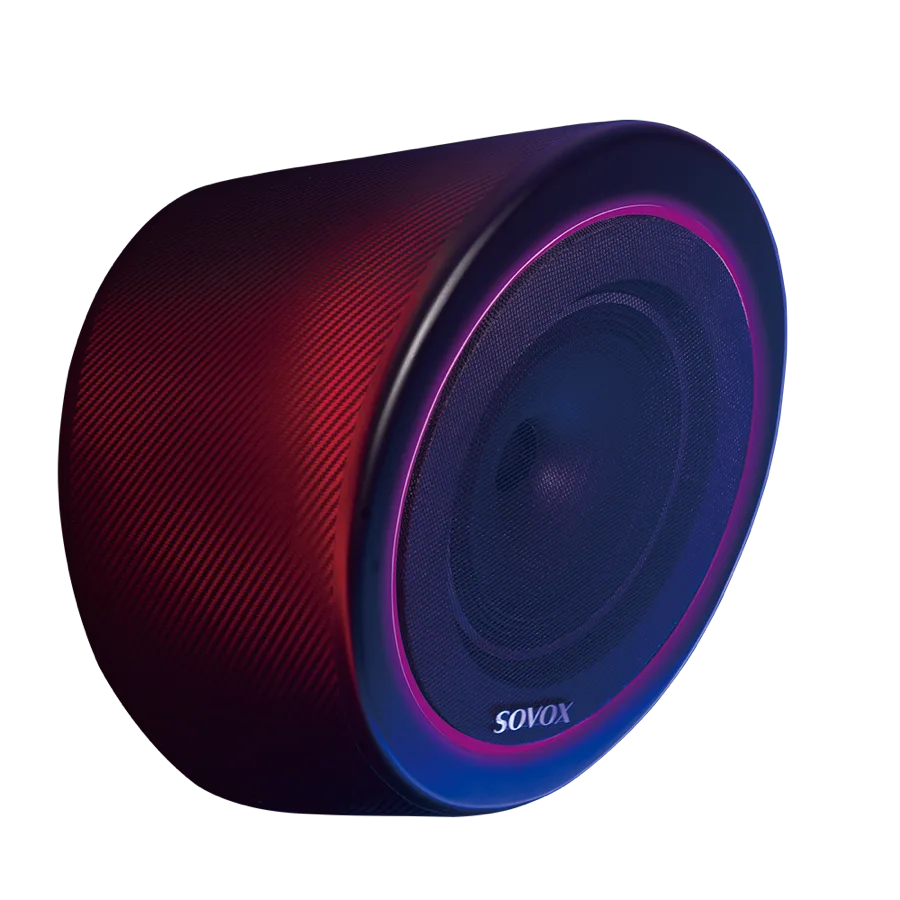
ES08
Cinema Surround Speaker
Coaxial two-way surround loudspeaker for the side- and rear-wall channels, with an 8-inch coaxial driver in a circular cabinet with integrated ambient lighting, long- or short-arm brackets for two-axis aiming and height-channel suspension. Hall width ≤ 8 m/11 m
Cinema surround channels · Wall mounting · Ceiling mounting
Features
- 8-inch coaxial driver and 1.5-inch dome tweeter on one axis, so coverage shape does not change with mounting angle.
- Round sealed enclosure with integrated ambient lighting, making the cabinet part of the auditorium design.
- 100° × 100° nominal coverage, identical in wall-mount and flown configurations.
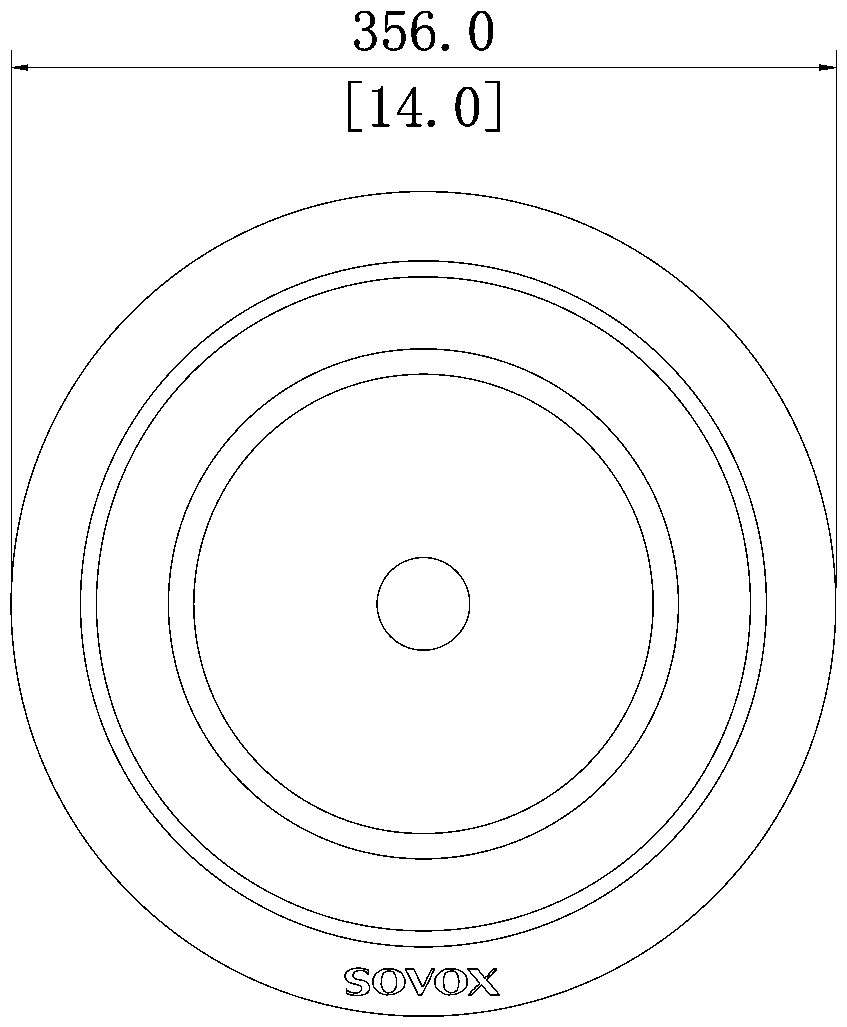
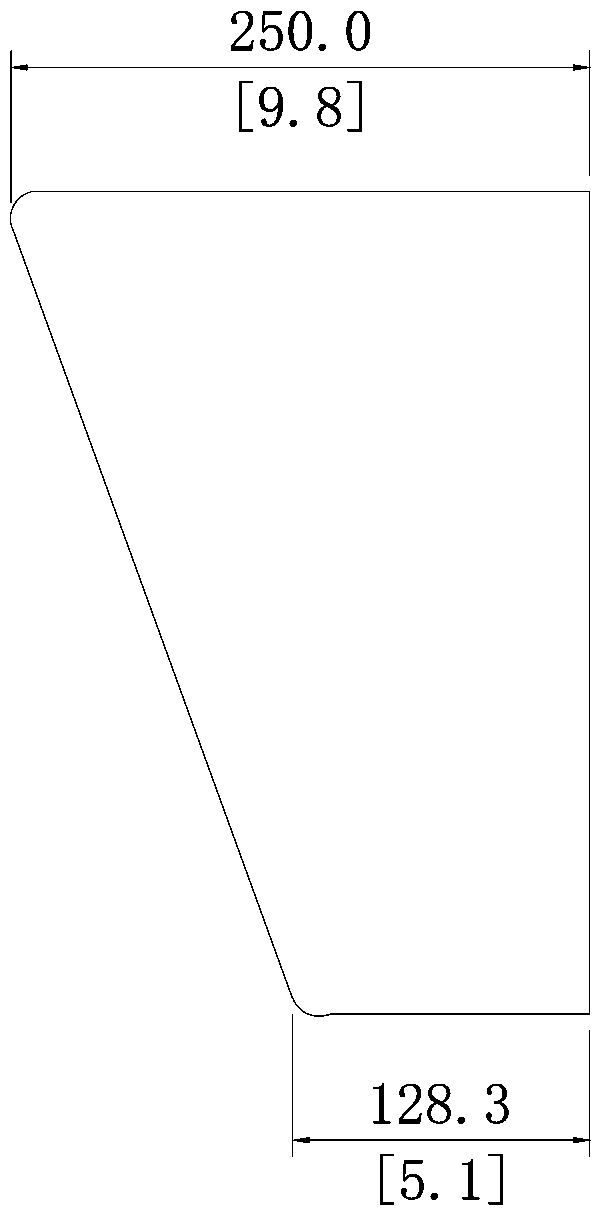
- φ355 mm round cabinet with a sloped back (250 mm deep at top, 128 mm at bottom) for tight wall or corner placement.
- Long-arm / short-arm brackets adjust horizontally and vertically; the cabinet can also be flown as a height channel.
- 8 Ω nominal; one amplifier channel per enclosure, with same-side units paralleled or series-paralleled; 7.7 kg.
Overview
The ES08 is the compact surround loudspeaker in the ES Eclipse Series for the side-wall and rear-wall surround channels of commercial auditoriums, suitable for wall or ceiling mounting, flush wall fixing, and ceiling suspension as a height channel for immersive formats such as Dolby Atmos. It pairs an 8″ coaxial driver with a 1.5″ dome HF section and delivers 55 Hz–20 kHz (±3 dB) and 100° × 100° nominal coverage from a φ355 mm circular sealed enclosure.
Low and high frequencies radiate on a common axis, and the circular sealed cabinet integrates ambient lighting so it reads as part of the auditorium's visual design; the cabinet back is sloped, 250 mm deep at the top and 128 mm at the bottom. The 8 Ω nominal load suits conventional amplifier channels; 92 dB sensitivity and a 150 W AES 100-hour rating define its output capability. Long- and short-arm brackets provide horizontal and vertical aiming, and a flush wall bracket gives a cleaner fixed installation where aiming is not required; net weight 7.7 kg.
Specifications
| Product Type | Cinema Surround Speaker |
|---|---|
| System Type | Coaxial two-Way, Passive |
| Driver Configuration | 8"coaxial +1.5“ HF dome |
| Nominal Impedance | 8Ω |
| Frequency Response (±3 dB @ 2π)2 | 55 Hz–20 kHz |
| Frequency Range (-10 dB @ 2π)2 | 49 Hz–20 kHz |
| AES 100-Hour Power Rating3 | 150W |
| AES 2-Hour Power Rating | 187.5W |
| Program Power4 | 300W |
| Sensitivity (2π) @1W/1m | 92dB |
| Rated Maximum SPL /1m @ 2π | 113.8dB |
| Calculated Maximum SPL /1m @ 2π5 | 119.8dB |
| Crossover Frequency | 2.5 kHz |
| Recommended HPF | 50 Hz |
| Coverage Angle (H×V) | 100°×100° |
| Enclosure Type | Sealed enclosure |
| Enclosure Material / Finish | MDF + PVC · Carbon fiber + PVC |
| Input Connectors | Binding posts |
| Mounting Options | Wall / ceiling |
| Dimensions W×H×D (mm) | φ355 × D250/128 mm |
| Net Weight | 7.7 kg |
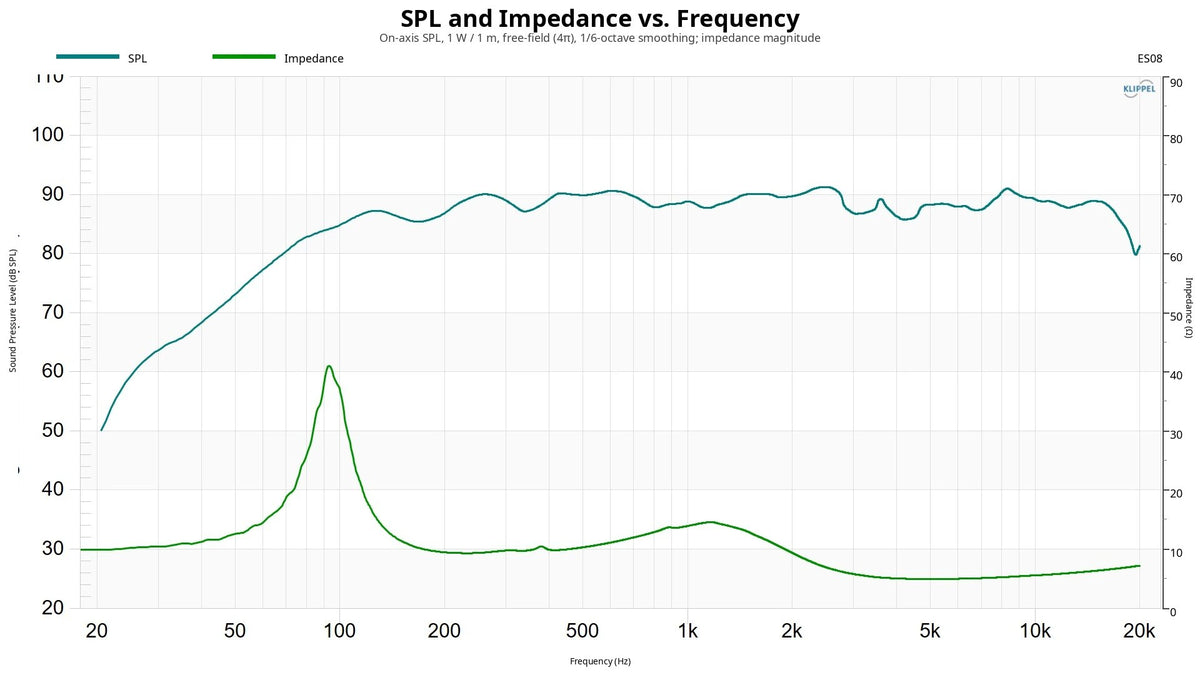
Frequency response
Dimensions
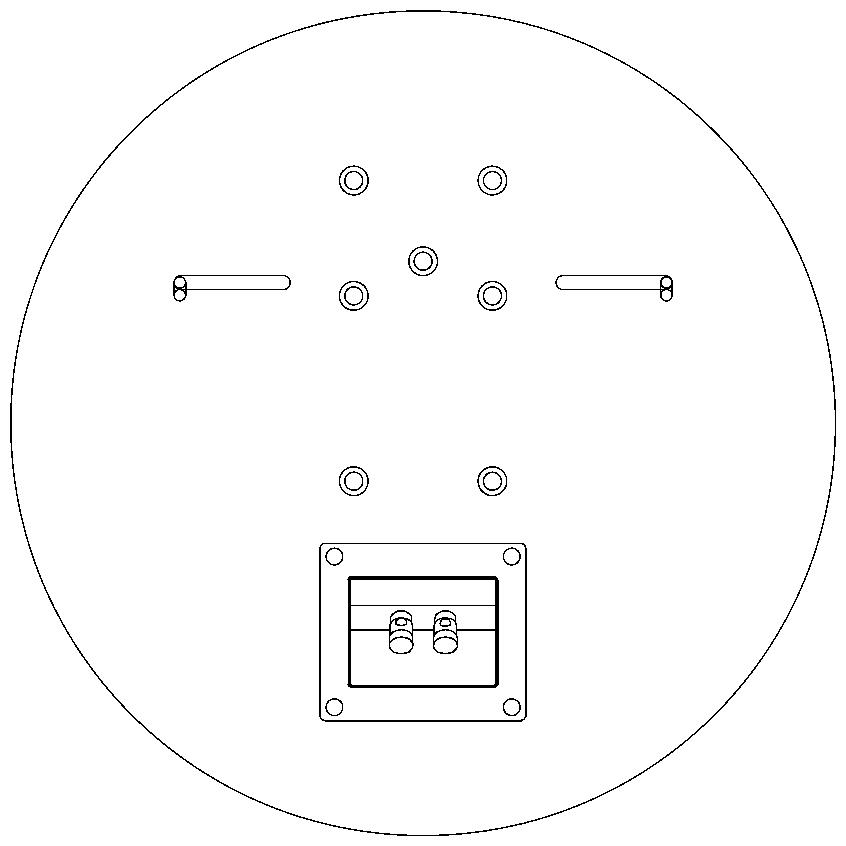
- 1Two length values are given: the first is the usable range on continuous power, the second on program power. Program power is a short-term maximum output and is not a level the system can sustain continuously. Target levels follow the SMPTE ST 202 / RP 200 cinema reference level: 82 dB for surround plus 20 dB peak headroom; hall width = lateral distance from the loudspeaker to the hall centre axis x 2. Listening distance is derived from free-field distance attenuation. The continuous-power range uses the rated maximum SPL in this table; the program-power range uses the rated value +3 dB (program power being twice the continuous power). The calculated maximum SPL (rated +6 dB, short-term peak) is not used for these figures. Screen loss, power compression, system limiting and room gain are not included - this is a theoretical estimate, not a measured guarantee; on-site verification is recommended. Operating beyond the recommended figure may result in, but is not limited to: dynamic compression, increased distortion, extraneous noise, and in severe cases equipment damage.
- 2Low-frequency response and sensitivity specifications are referenced to half-space (2π) conditions, representative of typical cinema baffle-wall installation. Frequency-response graphs are measured in an anechoic free-field (4π) environment unless otherwise noted. In the low-frequency region the same loudspeaker measures about 6 dB higher under 2π than under 4π (in practice 3–6 dB depending on frequency and baffle conditions); this is a difference of measurement convention, not of performance.
- 3Rating based on an IEC filtered random-noise test signal, band-limited 50 Hz–20 kHz, with a peak-to-average ratio of 6 dB
- 4Recommended amplifier output at the applicable impedance should not exceed the program power, giving an unclipped output waveform while avoiding loudspeaker damage; an amplifier capable of at least the RMS continuous power (AES 100 h) is recommended to realize full loudspeaker performance. The actual amplifier match should be determined by calculation for the listening distance (see note 1).
- 5Calculated maximum SPL is derived from the rated (continuous) power and half-space (2π) sensitivity and is a calculated, not measured, figure; at a 6 dB peak-to-average ratio it exceeds the rated value by 6 dB, representing short-term peak capability rather than a level the system can sustain.
- 6The frequency-response graphs on this page are measured on-axis at 1 W/1 m in an anechoic free-field (4π) environment with 1/6-octave smoothing; the frequency response and sensitivity in the specification table are stated under half-space (2π) conditions. Lower readings in the low-frequency region of the graph therefore reflect the difference in convention rather than a difference in performance. 2π-format curves are available on request.
- 7Passive, single-amplifier-channel enclosure; hall width above derived from its AES 100-hour rating and system sensitivity, with drive-unit-level verification pending.
More surround systems
All 14 models